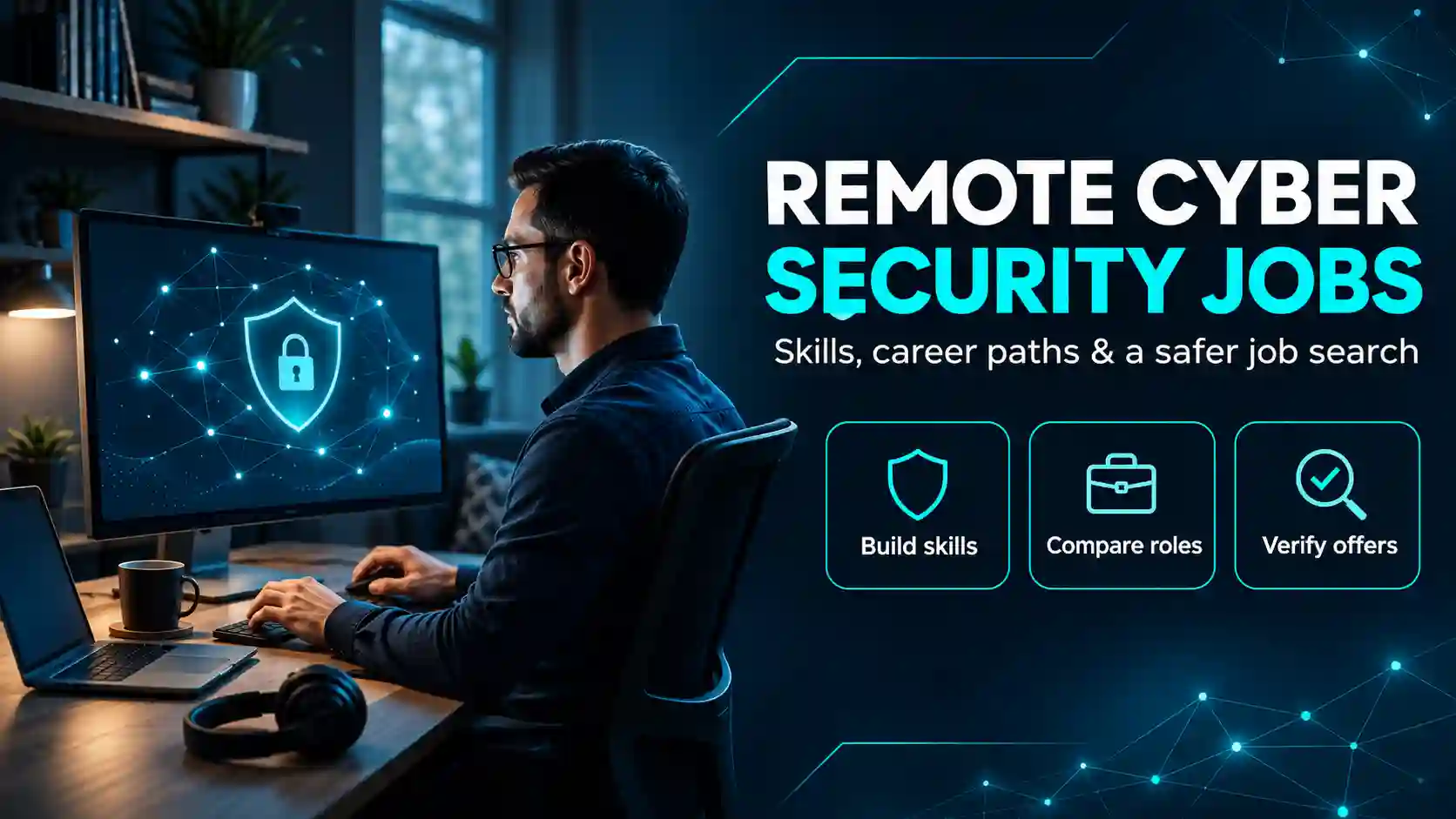
Remote cyber security jobs now span security monitoring, risk analysis, incident response, and other work that can be done online. But remote does not always mean work-from-anywhere: some employers hire only in specific states or expect occasional office visits.
Entry-level paths exist, though credentials alone rarely show what you can do. Hands-on projects, labs, or documented experience can help make your skills easier to assess. This guide explains how to compare roles, build credible skills, and search US job sites effectively. For more career and technology guidance, visit Digitally USA.
Choose a Remote Cybersecurity Role That Fits Your Starting Point
Job titles can make remote cyber security jobs sound more alike than they are. Start by matching the work you enjoy to the experience employers typically expect.
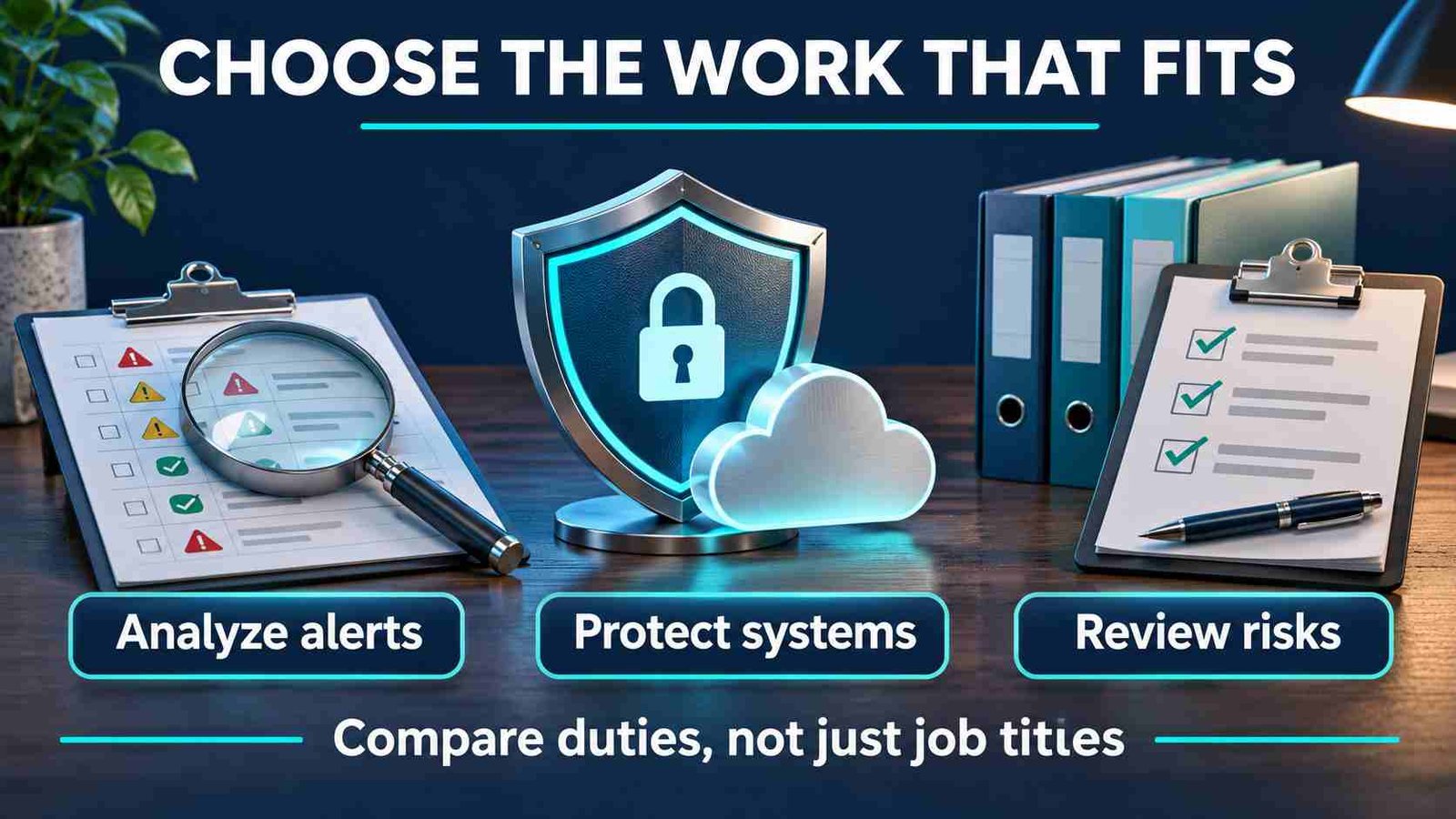
SOC analysts monitor alerts, review logs, and escalate suspicious activity. These roles can be a practical entry point, especially when employers offer junior or tier-one positions. Incident responders investigate confirmed attacks, contain threats, and help restore systems. They often need stronger technical skills and experience working under pressure.
Penetration testers look for weaknesses by testing systems and documenting fixes. Cloud security specialists protect services and data hosted on platforms such as AWS or Azure. Both usually require hands-on technical experience. Security engineers build and maintain defenses, such as access controls and monitoring tools, and commonly need solid IT or security experience.
Governance, risk, and compliance (GRC) roles focus on policies, audits, risk assessments, and evidence that an organization meets requirements. Some compliance work is accessible to newcomers with strong writing and organizational skills. Vendor reviews may also involve understanding how businesses compare procurement software solutions.
At smaller businesses, one person may handle security alongside IT support, system administration, and vendor management. Search titles such as “junior SOC analyst,” “GRC analyst,” or “cloud security engineer,” then check each posting’s daily duties and experience requirements.
When assessing remote cyber security jobs, ask whether you would join the employer’s own security team or a service provider supporting several client organizations. For an internal team, ask how deeply you will work with its systems and business owners. For a managed security service provider (MSSP) or managed detection and response (MDR) provider, ask how client assignments, investigation queues, and handovers are organized. The same analyst title can describe different working arrangements.
Compare the support available in each environment: who reviews your findings, who may approve containment actions, and how workload is assigned during busy periods. Ask how performance is evaluated, including the quality of investigations and documentation. For client-facing work, clarify reporting expectations and how customer information is kept separate. These questions help you assess the actual role rather than assuming one employer type is always better for beginners.
Check Location, Schedule, and Work Authorization Before Applying
Fully remote, hybrid, and telework-eligible describe different arrangements. A remote role may still require initial training, client visits, or travel. Confirm where you must physically work, whether relocation is allowed, and which office you would attend if the arrangement changes. For federal vacancies, read the remote and telework fields separately rather than relying on a search label.
When comparing remote cyber security jobs, check eligible states or countries, required working hours, and any work-authorization or sponsorship restrictions. A US remote vacancy does not automatically accept overseas applicants. Some roles also specify citizenship, clearance, or customer-site requirements; these are posting-specific conditions, not rules that apply to every cybersecurity job.
Ask about overnight shifts, weekend coverage, on-call rotations, and incident escalation. Security monitoring may run around the clock, while an advertised daytime position may still include emergency duties. Clarify how often coverage occurs, how handovers work, and whether the schedule fits your other commitments before accepting an offer.
What Entry-Level Really Means in Remote Cyber Security Jobs
For remote cyber security jobs, junior does not always mean no experience. Some employers expect previous help desk, networking, systems administration, or audit work because the security role builds on those foundations. Distinguish a required qualification from a preferred one, and look for evidence of supervision, training, and a clear escalation path in junior listings.
The BLS information security analyst profile describes typical education and related-experience expectations for that occupation. It is not a hiring rule for every security specialty or a separate measure of remote vacancies. Compare the actual posting with your experience rather than assuming one degree or certificate establishes readiness.
If your first fully remote security role is out of reach, consider supervised IT support, identity administration, internships, apprenticeships, or hybrid analyst work. These can build relevant evidence, but they are options rather than mandatory steps. Choose opportunities that develop the tasks your target role actually requires.
Build the Skills Employers Can Verify
Job titles vary, so focus on the work behind them. Learn networking basics, common operating systems, identity and access management, cloud concepts, and security fundamentals. These skills help you understand how systems connect, who can access them, and where risks may appear.
Practice turning evidence into useful findings. In a home lab, review sample logs and explain what looks suspicious, what you would check next, and when you would escalate. SIEM platforms help analysts collect and search logs; knowing how those searches support an investigation matters more than listing a product name.
Hands-on labs, home projects, and internships can show applied ability without implying professional experience. Keep brief write-ups that describe your setup, steps, findings, and limits. Clear documentation gives employers something concrete to assess—much like a guide to checking what an online service actually offers.
Remote cyber security jobs also depend on clear communication. Teams may be spread across time zones, so write clear incident updates, record decisions carefully, and explain technical risks in plain language. These habits help coworkers respond consistently, even when they are not in the same room.
Coding requirements for remote cyber security jobs depend on the role. For analyst work, practice reading a short script, filtering records, and explaining the result; small Python, PowerShell, or shell exercises can support those tasks. Identity-focused work may involve account lifecycle and permission reviews, while endpoint detection and response (EDR) work involves interpreting device alerts. Start with the tools and concepts relevant to your target duties rather than trying to master every platform.
Use Certifications and Projects Strategically
Certifications can help show you understand security fundamentals, but they do not prove you can handle the work. A foundational credential may help when you are starting out; role-specific options can signal focus in areas such as cloud security or governance. Before paying for an exam, check current job postings for remote cyber security jobs and see which credentials employers actually request.
When applying for remote cyber security jobs, projects offer a way to show how you apply what you have learned. Describe each one by explaining the problem, the tools you used, your actions, and the result. For example, you might document how you configured alerts in a home lab and improved detection of test activity. Remove sensitive data, and never publish real vulnerabilities or findings without authorization.
If you are changing careers and targeting remote cyber security jobs, connect your past work to security needs. IT support can demonstrate troubleshooting, while auditing can show careful documentation and control testing. Help desk and customer support experience can also provide evidence of clear communication, sound judgment, and handling sensitive information. Pair that experience with relevant training or projects to give employers a clearer picture of what you can do.
Build a Portfolio Around the Work You Want to Do
For a SOC-focused project, use sample authentication logs to investigate repeated failed sign-ins followed by a successful login. Record your search, the timeline, possible explanations, missing evidence, and when you would escalate. Label it as a simulation and avoid claiming an incident was confirmed when the available data does not establish that.

For GRC, create a small risk register for an invented organization: describe the asset, risk, existing control, evidence needed, responsible owner, and proposed next step. For identity or cloud security, document a sandbox access review using test accounts, explaining excessive permissions and a narrower alternative. Keep any cloud lab within a budget and remove unused resources.
For a portfolio targeting remote cyber security jobs, show your reasoning as well as screenshots. A concise report should state the scope, assumptions, findings, recommendations, and limitations. Use synthetic or permitted data, redact secrets and identifiers, and test only systems you own or have explicit permission to assess. Never scan an employer’s infrastructure as an unsolicited demonstration.
The NIST NICE Framework Resource Center provides a vocabulary for cybersecurity work and capabilities. Use it to connect a project with relevant tasks; it is not a job board, certification, or guarantee that an employer will accept a portfolio.
Search the Right Sites and Screen Remote Listings
Search general job boards and cybersecurity-focused boards using titles such as “SOC analyst” or “GRC analyst,” paired with “remote,” “United States,” and eligible states. Remote labels can be imprecise: some jobs require occasional office visits, restrict hiring to certain states, or expect work during specific time zones. Read the full posting before applying.
Check employers’ career pages directly, along with government hiring sites and contractor postings. Compare several listings for the same role; recurring requirements, such as SIEM tools, cloud platforms, or security frameworks, can help you prioritize what to learn. For remote cyber security jobs, also note whether the employer explains its team structure, location rules, and day-to-day responsibilities.
Be cautious with unsolicited recruiters and unusually urgent offers. Verify the employer and recruiter through independently located contact details, and review a guide to vetting an unfamiliar website. Never pay for hiring, training, or equipment, and do not share sensitive identity or banking details before confirming the employer and understanding why the information is needed.
Where to Look and How to Build Useful Searches
Use sources for different purposes rather than treating any board as proof that a vacancy is legitimate. LinkedIn Jobs and Indeed can help discover private-sector listings; USAJOBS is a starting point for US federal openings. For every result, check the organization’s own career page and confirm that the role, requisition number, and application route match.
When searching for remote cyber security jobs, try title variations because employers describe similar work differently: security operations analyst, SOC analyst I, information security analyst, IAM analyst, security compliance analyst, vulnerability management analyst, or cloud security analyst. Pair the title with remote and your eligible location, then read the responsibilities. Search filters and Boolean operators vary by platform.
Save a few focused searches for remote cyber security jobs and review results consistently. Record the posting date, location restrictions, required skills, employer link, and closing date where provided. Remove duplicates and expired vacancies from your tracker. If a recruiter represents a staffing firm, establish who employs you, which client you would support, and whether the remote arrangement applies for the full assignment.
Recognize Equipment-Check and Recruitment Scams
A convincing company name or video interview does not prove that a recruiter represents the employer. Find the company independently and confirm the vacancy through its official hiring channel. Look closely at email domains, payment requests, and pressure to move immediately to an unfamiliar messaging service.

The FTC’s job-scam guidance explains fake-check schemes in which a supposed employer sends money and asks the applicant to buy equipment or return an overpayment. Do not send money or purchase gift cards or cryptocurrency on that basis. A check appearing in your balance does not establish that it is legitimate.
Share identity and payroll information only through a verified onboarding process when there is a legitimate need. Do not install remote-control software or run an unknown script merely because someone claims it is an interview requirement. If you already sent money or sensitive information, contact the relevant payment provider promptly and use the FTC’s reporting and identity-theft resources.
Write a Résumé That Connects Your Evidence to the Role
When tailoring a résumé for remote cyber security jobs, start with the responsibilities in the posting and identify which ones you can support with real examples. Use terms such as access reviews, log analysis, or incident documentation when they accurately describe your work. Spell out unfamiliar abbreviations on first use, and follow the employer’s requested file format and application instructions.
Separate employment, education, certifications, and personal projects so a reviewer can tell where your experience came from. For a lab, a useful bullet might read: “Investigated sample sign-in logs, documented a timeline, and identified additional evidence needed before escalation.” Label the environment as a lab; do not turn simulated activity into a claim of professional incident-response experience.
Show scope and outcomes when you can substantiate them. Explain what changed and how you checked it; do not invent percentages or claim that a tool prevented attacks merely because you configured it. Include relevant remote-working examples, such as handover notes or team coordination, without disclosing confidential information.
Use a readable layout with clear section names and descriptive project links. Check that shared reports open correctly, and remove secrets and employer records. For remote cyber security jobs, a short application note can connect your strongest example with the vacancy and confirm that you meet its stated location and scheduling requirements.
Turn Your Search Into a Consistent Application Routine
A steady routine can make your search for remote cyber security jobs more manageable. Choose a small set of role titles that match your experience, then tailor your résumé to each posting’s requirements. Track applications, dates, and follow-ups so you can see what needs attention and adjust your approach.
Keep building skills through relevant labs or projects while you search. A focused portfolio, realistic role targeting, and careful verification of remote listings can make your search for remote cyber security jobs more productive, though hiring timelines vary.
Review your application tracker for patterns rather than judging your prospects from one rejection. If suitable applications rarely reach screening, revisit eligibility, role level, and how clearly your résumé demonstrates the required work. If you reach interviews but struggle with practical questions, identify specific gaps and practice those tasks before buying more training.
Ask recruiters about next steps and expected timelines, then follow their instructions. Avoid repeatedly applying to the same requisition through different channels. During interviews, ask who reviews a junior employee’s investigations, how help is requested, and what onboarding involves. Clear responsibilities and a reliable escalation route matter when working remotely with production systems or sensitive information.
Prepare for Practical Interviews and Clear Remote Communication
Prepare to explain a small investigation rather than recite tool names. For a suspicious-login scenario, describe what you know, what additional logs you would request, possible benign explanations, and the threshold for escalation. Explain how you would preserve useful evidence and follow the organization’s incident process instead of improvising disruptive changes.
For GRC interviews, practice explaining how you would request control evidence, document a gap, and communicate uncertainty to a business owner. Interviews for technical remote cyber security jobs may include networking questions, log interpretation, scripting, or a bounded practical exercise. Ask about the format, time limit, and permitted resources before starting.
Use examples from projects or previous work to show prioritization, documentation, and handovers. State your own contribution honestly. Keep take-home tasks within agreed scope and use supplied test environments; do not include employer data in a public repository or upload it to an AI tool without authorization.
Compare Pay, Benefits, and Contract Terms in Context
When comparing pay for remote cyber security jobs, compare job level, location eligibility, responsibilities, schedule, employment type, and the date of the listing. A national occupational median is not an entry-level offer, a remote-only salary, or a guarantee of what you will earn. Use published ranges as context and ask how the employer determines pay for your location.
Review the full package, including health coverage, leave, retirement benefits, training support, equipment, and any on-call expectations. For contract work, clarify the duration, payment terms, hours, renewal expectations, and which expenses or benefits you must cover yourself. Employee and independent-contractor arrangements are not interchangeable.
Before accepting, ask who manages the role, how performance is assessed, and what onboarding looks like. Confirm the remote arrangement and any travel or office expectations in the written offer. Questions about classification, taxes, or immigration should be checked with an appropriate qualified source for your circumstances.
Understand the Secure Home-Working Setup
For remote cyber security jobs, ask whether the employer provides a managed device, approved remote access, and a private workspace requirement. Follow its rules for multifactor authentication, screen locking, updates, and handling sensitive information. Keep work accounts and records within approved systems rather than copying them to a personal device or cloud account.
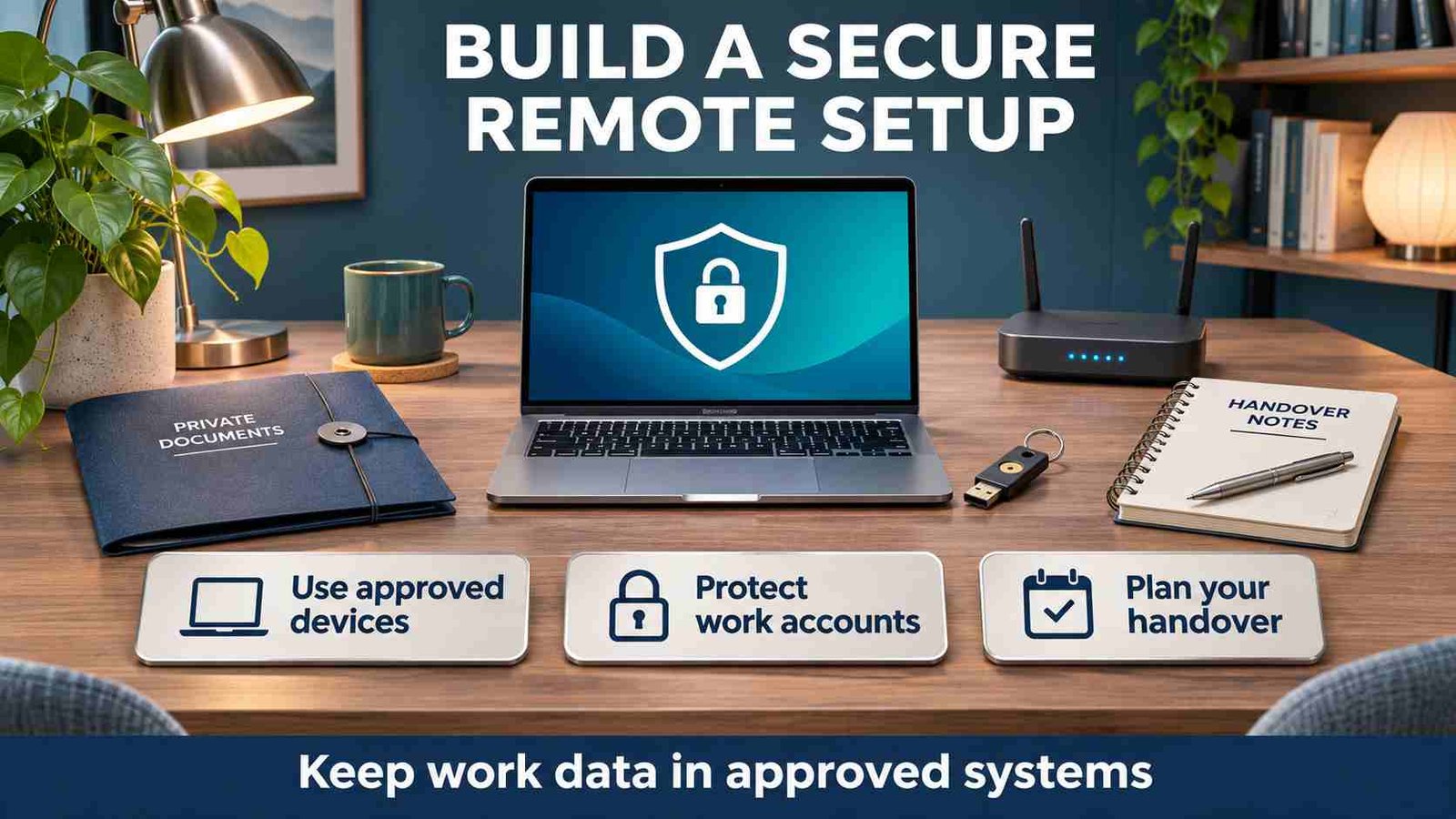
Before starting remote cyber security jobs, clarify how to report lost connectivity, a suspected compromise, or an unavailable work device. Agree on a backup communication method and handover process. Reliable internet and a quiet workspace help, but remote readiness also means knowing when to escalate and how to protect information when working without nearby colleagues.
Frequently Asked Questions
1. Can I get a remote cybersecurity job with no experience?
It is possible, but some junior listings still expect related experience. Look for supervised opportunities, demonstrate relevant lab work, and consider IT support or hybrid roles that build useful foundations.
2. Do remote cyber security jobs allow working from any country?
Not automatically. Employers may limit eligible countries or states and require specific working hours, work authorization, or travel. Confirm the permitted work location before applying or planning to move.
3. Do I need a degree or certification?
Requirements vary by employer and specialty. Some listings specify a degree or credential; others consider equivalent experience. Compare several target postings before choosing training, and support qualifications with practical evidence.
4. Which cybersecurity roles should beginners search for?
Look for junior SOC, security operations, identity administration, or compliance roles whose duties match your skills. Titles alone are unreliable; check required experience, supervision, training, and escalation responsibilities in each listing.
5. How much do remote cybersecurity jobs pay?
Pay depends on experience, location, duties, schedule, and employment terms. Compare current advertised ranges for similar roles; national occupational statistics do not establish a remote-only or entry-level salary.
6. What should a cybersecurity portfolio include?
Include focused, authorized projects with a clear scope, your actions, findings, and limitations. Use synthetic or permitted data, explain your reasoning, and remove credentials or sensitive information before sharing.
7. Are remote cybersecurity jobs always flexible about hours?
No. Security teams may require specific time zones, shifts, weekend coverage, or on-call work. Ask about the actual schedule and incident-response expectations rather than assuming remote means flexible hours.
8. How can I tell whether a remote job offer is legitimate?
Verify the vacancy through the employer’s independently located career page or contact channel. Treat equipment checks, payment demands, urgent messages, and requests for sensitive information before verification as warning signs.
Conclusion
Remote cyber security jobs cover several kinds of work, so begin with responsibilities rather than a broad job label. Match a realistic role to your networking, systems, analysis, or documentation skills, then build evidence that shows how you think and work. Check location eligibility, work authorization, schedules, and supervision before investing time in an application. A certificate or portfolio can support your case, but neither replaces the requirements of a particular vacancy or guarantees a hiring outcome.
Use a small set of focused searches, verify openings through employers, and tailor applications with accurate examples of your contribution. Prepare to explain investigations, risk decisions, and remote handovers clearly. Compare compensation and employment terms in context, and take equipment-payment requests or unverified onboarding channels seriously. Keep learning while reviewing the results of your search: better-targeted applications, practical feedback, and finished projects can help you identify the next useful step without relying on promises of an instant remote career.