AI in ecommerce is showing up across online shopping and ecommerce operations, from product recommendations to customer service and inventory planning. These tools can help businesses handle specific tasks, but they are not automatic fixes for slow workflows or difficult decisions.
Whether AI is useful depends on the problem a business wants to solve, the quality and availability of its data, the oversight people provide, and the full cost of using and maintaining the tool. Some businesses may benefit from testing a focused use case; others may find that existing processes work better. The practical question is not whether to adopt AI, but whether a particular tool can help with a real need—and do so reliably.
What AI ecommerce means
AI ecommerce is the use of artificial intelligence systems in online retail experiences and business operations. Depending on the tool, AI may help shoppers find products, assist with customer questions, or support tasks such as organizing catalog information and estimating demand. The term covers different technologies, so it does not describe one standard feature or capability.
Artificial intelligence, or AI, is a broad category of systems that can perform tasks such as recognizing patterns, making predictions, or processing language. Generative AI is one part of that category. It creates new content, such as product text or images, based on instructions and other inputs. Other AI tools may analyze data or make recommendations without generating content.
That distinction matters when evaluating an ecommerce tool. A system that drafts product descriptions works differently from one that ranks search results or estimates inventory needs. Its usefulness depends on the task, the information it uses, and how people check its output.
Where ecommerce businesses use AI
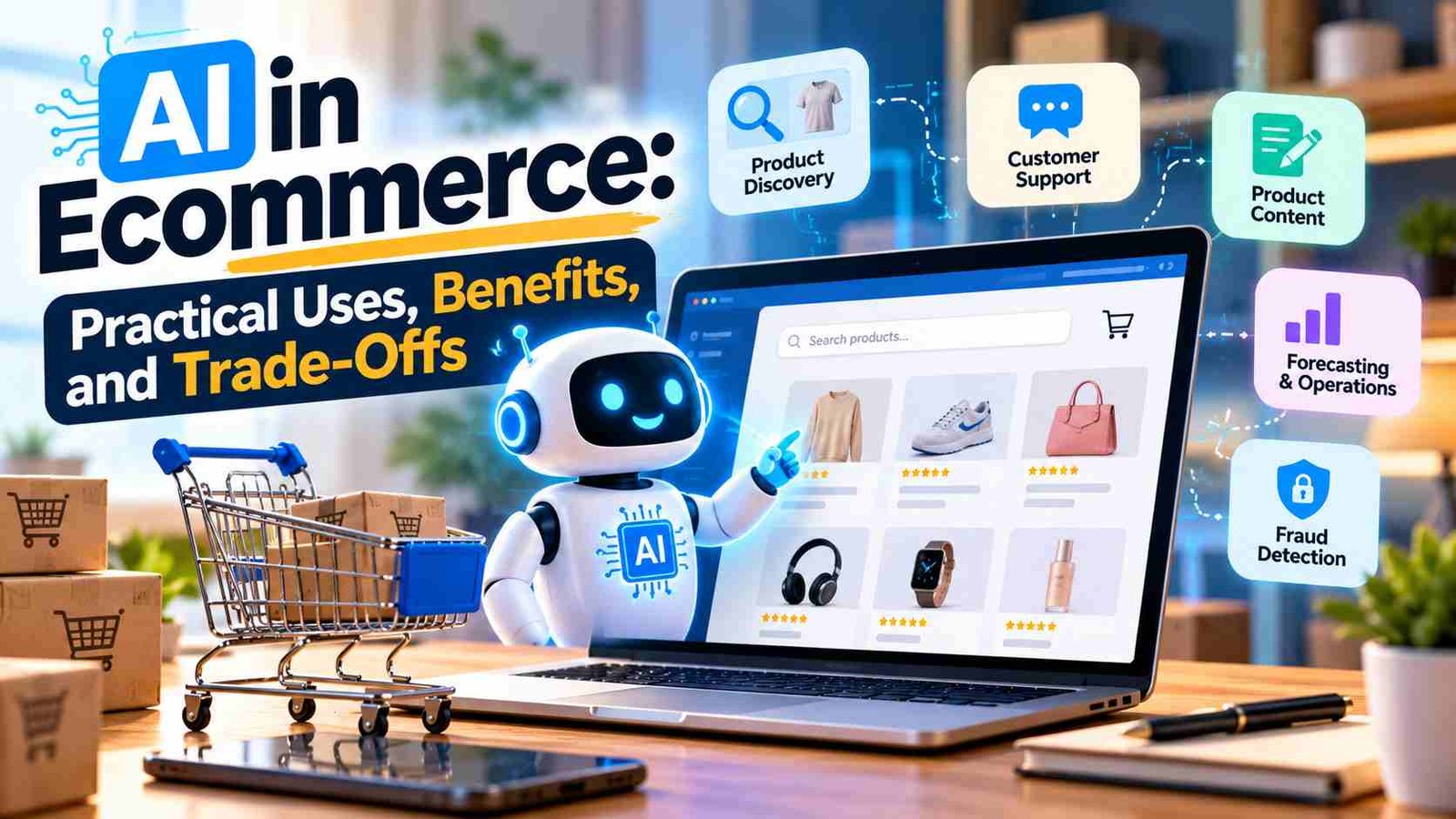
AI can support several parts of an ecommerce business, though the role it plays depends on the tool and how it is configured. In product discovery, recommendation and search systems may help shoppers find items that match their interests or queries. Customer support tools can respond to routine questions or guide shoppers toward useful information. For merchandising and content, AI may help organize product details, draft descriptions, or prepare campaign materials for review.
Behind the scenes, forecasting tools can help estimate demand and inform inventory planning, while other systems may help prioritize operational tasks. AI can also assist with fraud or risk review by flagging activity for closer attention. These tools do not all work in the same way, and their outputs may need human review. Their usefulness depends on the task, the data available, and the business’s setup and oversight.
Personalized product discovery
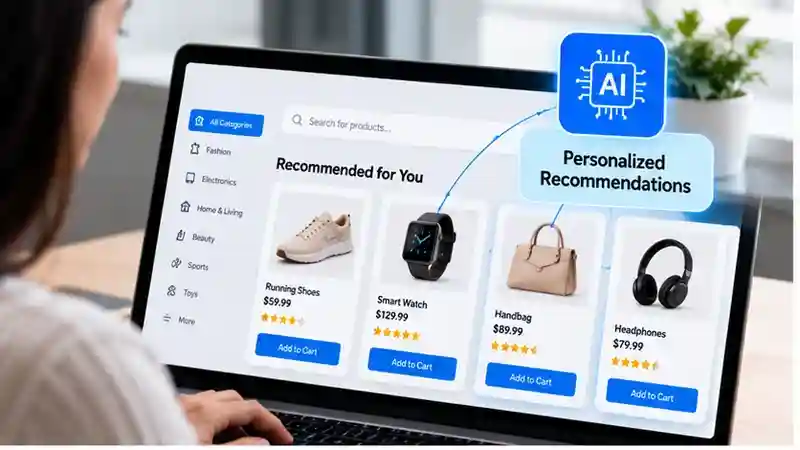
Product discovery tools can help shoppers narrow a large catalog to items that may fit what they are looking for. Search systems can use a shopper’s query to match products with relevant terms or attributes, while recommendation tools may suggest items based on signals such as browsing activity. Depending on the setup, these tools can help surface useful options without requiring shoppers to browse every category. For a practical example, Google Cloud’s retail AI solutions illustrate how AI-powered search and recommendation systems can support online product discovery.
That assistance is only as useful as its relevance. If product details are incomplete or inconsistent, search results and recommendations may miss the mark. A shopper’s interests can also change, so past activity may not always indicate what they want now. Businesses should review whether results make sense for their products and customers, rather than assuming that automated suggestions are accurate.
Privacy matters, too. Businesses should be clear about what information these tools use and how it is handled. Relevant suggestions can make shopping easier, but they should not come at the expense of clear, trustworthy data practices.
Customer support and shopping assistance
Chatbots and AI assistants can help with common customer-service and shopping tasks. A chatbot might answer routine questions about shipping, returns, or store policies using information provided by the business. An assistant could help a shopper compare product features or direct them to a relevant category or support channel. These tools may make information easier to find, especially when a question has a clear answer.
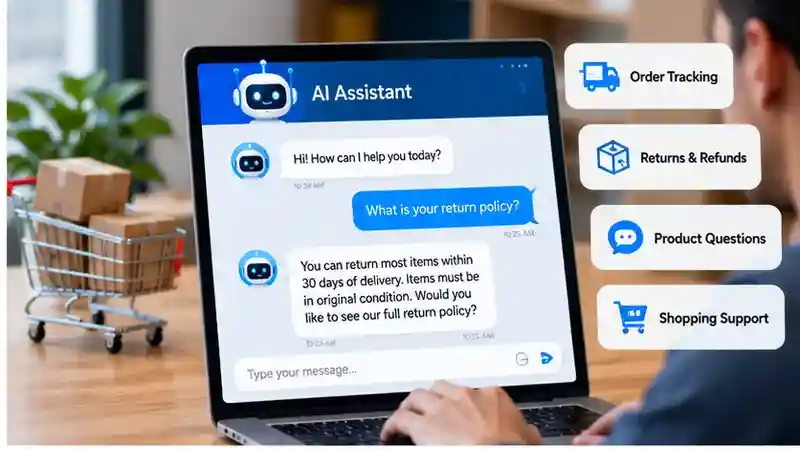
However, an automated response is useful only if it is dependable and appropriate to the question. Outdated or incomplete information can mislead shoppers, and an assistant may not understand a complicated request. Businesses should check that responses reflect current policies and product details, and monitor how the tool handles questions it cannot answer. Shoppers should also have a straightforward way to reach a person, rather than getting stuck in an automated loop. AI can support customer service, but it should not make human help difficult to access when a customer needs it.
Read Also: AI Assistants: What They Can Do, How to Use Them, and What to Watch For
Product content and merchandising
AI tools can assist with the routine work of managing an online catalog. A generative AI system might draft product descriptions from supplied details, suggest categories for new items, or prepare copy for a campaign. Other tools may help organize product information or identify catalog fields that need attention. These uses can save time on first drafts and repetitive tasks, but they do not remove the need for review.
Before publishing, a person should check that descriptions accurately reflect the product and make no unsupported claims. AI-generated copy may sound repetitive across a catalog or omit details shoppers need. If a tool creates or selects product imagery, someone should also confirm that the images suit the item and represent it appropriately. Campaign drafts need review for accuracy and fit with the business’s messaging, too. Treat AI output as material to edit—not as approved content. The quality of the result depends on the information provided and the checks made before it reaches customers.
AI tools can also assist with drafting and editing product descriptions. For a broader look at AI-assisted writing, see our guide to ChatGPT for Writing, which explains practical uses, limitations, and the importance of reviewing generated content.
Forecasting and back-office operations
AI-enabled tools can help ecommerce teams estimate how much demand they may see for particular products. These estimates can inform inventory planning, such as when to review stock levels or consider replenishment. Some tools may also help teams prioritize back-office work by flagging orders or tasks that appear to need attention.
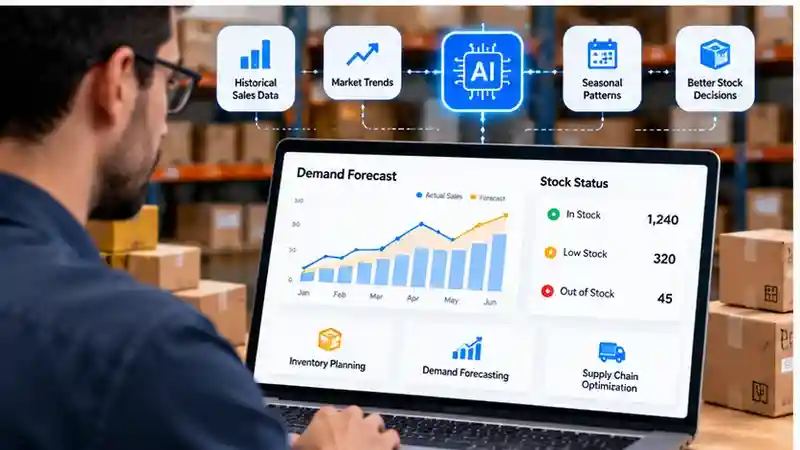
A forecast is an estimate, not a guarantee. It may not account for changes in customer preferences, supply delays, or other factors that affect a business. Its usefulness also depends on the data available and how well the tool fits the company’s products and processes.
Before relying on a forecast, compare it with your business context and actual outcomes. Check whether it helps with decisions such as managing stock or organizing work, and note when its estimates miss the mark. Use those results to decide whether the tool is useful, needs adjustment, or is not a good fit. Human judgment remains important when business conditions change or an estimate does not seem plausible.
AI in Ecommerce: Real-World Examples
These illustrative scenarios are hypothetical, not verified case studies. They show how AI might assist with specific ecommerce tasks—and where human review still matters.
1. Drafting product descriptions
A small online store gives an AI tool product specifications and asks it to draft descriptions. A person checks each draft against the product details and removes unsupported claims before publishing. One limitation: incomplete or inaccurate input can produce misleading copy.
2. Answering routine questions
A retailer uses an AI assistant to respond to common questions about shipping or returns using store policies. Staff verify that answers reflect current information and that customers can reach a person when needed. One limitation: the assistant may misunderstand a complicated question or lack enough context to answer reliably.
3. Planning inventory
An ecommerce business uses demand forecasts to help decide when to review stock or consider replenishment. A team member compares estimates with current conditions and actual sales before making decisions. One limitation: forecasts are estimates and may not reflect sudden changes in demand or supply.
AI Ecommerce Applications: Benefits and Limitations
This table compares common AI applications in ecommerce. The benefits are potential outcomes, not guaranteed results; they depend on the tool, its data, and how the business uses it.
| AI Application | Business Task | Potential Benefit | Key Limitation |
|---|---|---|---|
| Product recommendations | Suggest products based on shopper queries or browsing activity | Help shoppers discover relevant items | Incomplete data or changing interests can reduce relevance |
| Customer support chatbots | Answer routine questions or direct customers to support | Make common information easier to access | May misunderstand questions or give unreliable answers |
| Product content generation | Draft descriptions or organize catalog content | Speed up repetitive content work | Output may be inaccurate, repetitive, or unsupported |
| Demand forecasting | Estimate demand to inform inventory planning | Support stock and replenishment decisions | Estimates may miss changes in demand or supply |
| Fraud detection | Flag activity for risk review | Help teams identify activity that may need attention | Flags may require review and can be incorrect |
Choose tools to fit a specific business need, and weigh their limitations alongside their potential benefits.
Potential benefits—and their limits
When a tool fits a clear need, AI may help ecommerce teams complete routine work faster, such as preparing product drafts or responding to common questions. Recommendation and search systems may make product discovery more relevant for shoppers, while forecasting tools can support inventory and other operational decisions. These are possible gains, not guaranteed outcomes.
Getting value can take more work than switching on a feature. Teams may need to prepare data, connect the tool to existing systems, review outputs, and maintain the setup over time. Errors can lead to misleading content or unhelpful responses, while biased results may affect which products shoppers see or how requests are handled. Poorly managed automation can also weaken customer trust, particularly when people cannot get clear answers or reach human support.
Returns are uncertain, too. A tool may save time in one workflow but add costs elsewhere, and its results may be difficult to assess without a suitable baseline. Consider both the potential improvement and the effort required to achieve and sustain it. The best fit is the tool that addresses a real business need at an acceptable cost, with safeguards for customers and staff.
Risks and Challenges of AI in Ecommerce
AI tools can introduce risks that vary by task and setup. A system that drafts product descriptions may add inaccurate details, while a chatbot may give an unreliable answer about a return or order. Human review before publishing content, regular checks of chatbot responses, and a clear route to human support can help limit these problems.
Customer data also needs careful handling. Before using a tool, clarify what information it collects, how it is used, and who can access it. Clear data-handling policies can help protect customer privacy. Businesses should also check whether automated recommendations or decisions treat customers or products unevenly, and monitor outputs for patterns that need attention. Businesses can also consult the Federal Trade Commission’s business guidance for information about consumer privacy, data security, and responsible business practices.

Integration can be difficult if a tool does not work well with existing systems or processes. Ongoing costs may include setup, maintenance, and staff time, so assess the full commitment before adopting it. Define who will review errors and how issues will be reported and addressed. These safeguards do not eliminate risk, but they make it easier to spot problems and respond before they affect more customers.
How to evaluate an AI ecommerce tool
Before committing to an AI ecommerce tool, ask questions that connect its capabilities to a specific business need:
- What problem are you trying to solve? Name a task, such as drafting product descriptions or answering routine questions, rather than adopting a tool simply because it offers AI features.
- What can the tool do, and where does it fall short? Ask what tasks it supports, what inputs it needs, and what errors or limitations to expect.
- What data does it use? Find out whether it processes customer, product, or business information, how that information is handled, and who can access it.
- Will it fit your workflow? Check its integrations, available controls, and how staff can review, correct, or override its output.
- What is the total cost? Include setup, integration, maintenance, and staff time for reviewing its work—not just the tool’s price.
- How will you judge a trial? Set a baseline and choose measures tied to the task, such as response accuracy, time saved, error rates, or operating costs. Decide in advance what results would justify continuing.
For a more structured approach to assessing AI-related risks, businesses can refer to the NIST AI Risk Management Framework, a voluntary resource for evaluating and managing risks associated with AI systems. Use the answers to assess the tool against your business needs, rather than relying on broad promises about what AI can do.
Start small and review results
Choose one clearly defined task for an initial AI trial, such as drafting product descriptions or answering routine questions. Test the tool on a limited part of that workflow, and compare its results with a baseline: how the task was handled before the trial.
Track measures that fit the task. These might include response accuracy, time saved, customer satisfaction, error rates, or operating costs. Ask employees who use the tool what works, where it creates extra effort, and which outputs need correction. Also review the customer impact, including whether information is clearer and whether people can still get help when they need it.
If the tool meets your criteria without creating unacceptable problems, consider expanding it gradually. If results are mixed, adjust the setup or workflow and test again. If it adds costs or errors without solving the original problem, discontinue it. Successful AI adoption depends on addressing real business needs, keeping human oversight, and measuring actual results—not relying on promotional claims.
Frequently Asked Questions
1. What is AI in ecommerce?
AI in ecommerce refers to using artificial intelligence tools to support online retail activities, including product recommendations, customer service, content creation, inventory planning, and business operations.
2. How is AI used in ecommerce businesses?
Ecommerce businesses may use AI to recommend products, answer customer questions, draft product descriptions, forecast demand, and flag potentially suspicious transactions for review.
3. What are the benefits of AI in ecommerce?
AI may reduce repetitive work, improve product discovery, support customer service, and assist with inventory decisions. Actual benefits depend on data quality, implementation, and human oversight.
4. Can AI improve ecommerce customer service?
AI chatbots can help answer routine questions about products, shipping, and returns. However, businesses should monitor responses and provide access to human support for complex issues.
5. How does AI personalize online shopping?
AI recommendation and search systems may use product information, customer queries, or browsing activity to suggest relevant items. Their effectiveness depends on accurate data and appropriate privacy practices.
6. How much does AI ecommerce software cost?
Costs vary by provider, features, usage, and integrations. Businesses should consider subscriptions, setup, maintenance, and employee review time when evaluating the total expense.
7. What are the risks of using AI in ecommerce?
Potential risks include inaccurate product information, unreliable chatbot responses, privacy concerns, biased recommendations, integration difficulties, and ongoing maintenance costs.
8. How can businesses choose the right AI ecommerce tool?
Identify a specific business problem, compare relevant features, review data security and integration requirements, and test the tool on a limited task before wider adoption.
Conclusion
AI in ecommerce can support online retailers through personalized product discovery, customer service automation, product content creation, demand forecasting, and operational assistance. These applications may help businesses manage repetitive tasks and make certain processes more efficient, but their effectiveness depends on the quality of available data, the capabilities of the selected tools, and appropriate human oversight. AI-generated descriptions require accuracy checks, automated customer responses need monitoring, and inventory forecasts should be evaluated against actual business conditions. Rather than adopting artificial intelligence simply because it is available, ecommerce businesses should identify specific challenges and determine whether an AI solution can address them at a reasonable cost.
Before implementing AI in ecommerce, businesses should evaluate software compatibility, customer privacy, data security, operating expenses, and the level of control employees retain over automated outputs. Starting with a small trial allows teams to compare performance against existing workflows and measure practical results, such as time saved, response accuracy, error rates, and customer satisfaction. If a tool produces reliable improvements without introducing unacceptable costs or risks, its use can be expanded gradually. Regular monitoring and human review remain important as business requirements change. Ultimately, effective AI adoption means selecting technology that supports measurable business goals while maintaining accurate information, responsible data practices, and customer trust.
Personalized recommendations can help shoppers discover products, but relevance does not always mean better value. Our Online Shopping Deals guide explains how to compare prices, review total costs, and assess offers before purchasing.