Applied Digital: A Practical Guide to Using Technology for Better Results
Ismein “Better” positive sentiment word hai, aur original title ka meaning bhi preserve hai.
Applied digital means using digital technology to solve a real problem or make a task more useful—not adopting tools simply because they are new or available. A tool’s value depends on the need it serves and whether it helps meet that need.
That can mean using a calendar app to coordinate family schedules, a video call to communicate with colleagues, or software to organize a workplace process. The right approach depends on the people involved, the task, and the result they need.
This guide looks at everyday and workplace examples, how to choose tools thoughtfully, and which skills can help you use them well. It also covers trade-offs, including privacy, security, accessibility, cost, and well-being, so you can weigh potential benefits against practical limitations.

What “applied digital” means
Applied digital is the purposeful use of digital tools and capabilities to meet a need or carry out a task in a particular setting. The phrase can describe many kinds of work, from organizing personal information to coordinating a team. What counts as useful depends on the people involved, the task, and the outcome they are aiming for.
Owning a smartphone or using software does not, by itself, mean someone is applying digital technology effectively. Nor does knowing technical terms necessarily show how to use a tool to solve a practical problem. The distinction is in the application: choosing and using a digital capability for a clear purpose, then considering whether it fits the situation.
For example, a shared document may help a group work on the same draft, while a paper copy may be easier for a task that does not need collaboration. Applied digital is not about making every activity digital. It is about understanding what a task requires and using technology when it offers a suitable way to meet that need.
Where applied digital shows up
Applied digital can support personal tasks, communication, learning, creative work, and organizational processes. The tools vary, but the principle is the same: use a digital capability for a task that matters.

For a practical example of AI-powered writing in everyday work, see our ChatGPT for Writing guide, which explains drafting and reviewing content with digital assistance.
- For personal tasks, a budgeting spreadsheet might help organize household expenses, while a calendar app could keep track of appointments.
- For communication, people might use messaging, video calls, or shared documents to coordinate plans or discuss a project.
- For learning, someone could use an online course or digital reference materials to explore a subject at their own pace.
- For creative work, drawing software, audio tools, or a word processor can support making and revising projects.
- In an organization, a team might use a shared task board to track responsibilities or a digital form to collect information.
These examples are not guarantees that a particular tool will be useful in every situation. The right choice depends on the task, the people involved, and whether the tool makes the work clearer or easier to manage.
Start with the need, not the tool
Before choosing an app or service, get clear about the task. A simple four-step check can help:
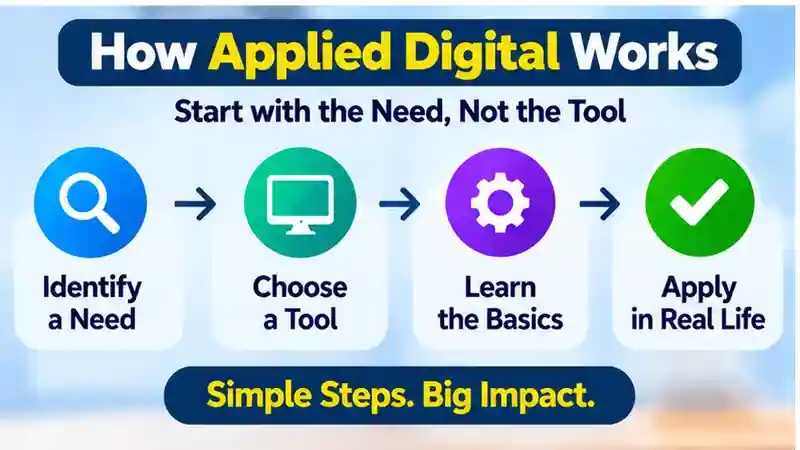
Identify the problem. What needs to be done, organized, shared, or made easier?
Consider who is affected. Think about who will use the approach and whether anyone has different access needs or constraints.
Define a useful outcome. Be specific about what would improve. For example, a family might want one clear place to check everyone’s appointments.
Decide whether digital fits. Consider whether a digital tool would help achieve that outcome without adding unnecessary steps.
For a shared schedule, a calendar app might be useful if everyone can access and update it. If only one person needs to keep track of a few dates, a paper calendar or written list may be simpler. The point is not to make every task digital. It is to choose an approach that suits the people involved and the work they need to do.
Choose tools with care
Once you know what you need, compare tools against the task rather than choosing by name or popularity. A good fit should support the outcome you defined without making the process harder than it needs to be. Consider who will use it, how easy it is to learn, and whether it works with the devices, software, or systems you already rely on.
When comparing AI-based tools, our ChatGPT alternatives guide provides a task-focused way to evaluate options.
Look at the full cost, including any fees or resources needed to set up and maintain the tool. Check whether its features are accessible to the people who need them, and what help is available if you run into problems. Also consider what information the tool collects, stores, or shares, especially if you may handle sensitive details.
Compare more than one option when you can, and verify current product details, terms, and settings before deciding. Broad claims such as “easy to use” or “secure” may not tell you whether a tool suits your situation. The best choice is the one that meets your needs, works for the people involved, and has limitations you understand.
Build the skills to use tools well
Using digital tools well depends less on knowing technical jargon than on building practical habits. Start by learning how to find information and assess whether it is relevant, current, and credible before relying on it. Keep files organized, use clear names, and manage accounts carefully so you can find what you need and understand where information is stored.

The Digital Literacy portal offers additional resources for developing practical technology skills.
Communication matters, too. Choose a suitable channel, make your message clear, and check that shared files or updates reach the people who need them. Get familiar with basic settings, such as notification preferences and who can access a document. These small steps can make a tool easier to manage and help you avoid unintended sharing.
You do not need to master every feature before trying something new. Explore an unfamiliar interface, practice with a low-stakes task, and check whether the tool produced the result you intended. If it did not, adjust your approach or look for guidance. Practice and careful review are more useful than memorizing a list of technical terms.
Explore Free Digital Skills Resources
If you want to put digital skills into practice, you can explore Google Applied Digital Skills, a free educational resource offering practical lessons on using digital tools for everyday tasks, learning, and work. Its activities can help you develop useful technology skills at your own pace. Explore the available lessons and choose those that match your needs and experience level.
Use digital tools safely and responsibly
Using a digital tool can involve sharing information, granting access, or creating an account. Before you begin, check what data the tool asks for and whether it is necessary for your task. Avoid entering sensitive details unless you understand how they will be used and have a good reason to share them.
For practical account-security guidance, see the CISA Secure Our World resources on passwords, multifactor authentication, and recognizing phishing.
A few habits can reduce avoidable risks:
- Use strong, unique passwords for important accounts, and turn on available account protections, such as extra sign-in verification.
- Review privacy settings and permissions. Limit access to files, devices, or personal information to what the task requires.
- Pause before sharing information, especially in public spaces or with people you do not know. Check recipients before sending a message or document.
- Be cautious when handling sensitive information, such as financial, health, or identity details. Use an appropriate channel and avoid storing more than the task requires.
These steps are sensible precautions, not guarantees. No tool or service is risk-free, and settings or practices can change. Revisit them when your needs change, and consider whether a less sensitive or non-digital method would work just as well.
Check whether the approach is working
After using a tool for a while, compare the experience with the need you identified at the start. Does it help you complete the task or reach the intended outcome? Is it clear how to use, and does it fit into your routine without creating extra steps for you or others?
Consider the full trade-off, not just the tool’s main feature. Account for ongoing costs, setup and maintenance, accessibility, and any extra work involved in managing information or reviewing results. A tool that helps with one part of a task may still be a poor fit if it adds more effort elsewhere.
If the approach is not working, adjust how you use it, try another option, or stop using it. Digital tools are means to an end, not commitments to keep. Keep using one when it offers practical value and its limitations are manageable.
Common mistakes to avoid
A few habits can make a digital approach less useful. Treat these as practical cautions, not fixed rules; the right choice depends on the task and the people involved.
- A popular tool may still be a poor fit. Check whether it meets your need and works for everyone who will use it.
- Before committing, consider whether people can access and use the tool and what information it handles.
- Automation can save steps, but it does not remove the need to review important results before acting on them.
- Adding apps, settings, or steps can make a task harder to manage. Keep the extra complexity only if its value justifies the effort.
Applied digital is the purposeful, informed use of technology to meet a real need—not technology for its own sake. To put the idea into practice, choose one task you want to improve. Consider who is involved and what a useful outcome would look like, then test a digital approach that fits. Pay attention to whether it makes the task easier, what extra effort or cost it brings, and any limits around access, privacy, or security. Keep it only if the value makes sense for your situation.
Frequently Asked Questions
1. What does applied digital mean?
Applied digital means using digital technology to solve practical problems, complete tasks, or improve everyday activities. It focuses on choosing useful tools for specific needs rather than adopting technology unnecessarily.
2. What are some examples of applied digital?
Common examples include using calendar apps for scheduling, spreadsheets for budgeting, video calls for communication, online learning platforms for education, and project management tools for workplace collaboration.
3. Why are applied digital skills important?
Applied digital skills help people use technology effectively in daily life, education, and work. They support communication, information management, problem-solving, and safer use of digital services.
4. How do I choose the right digital tool?
Identify your main goal, then compare tools based on features, ease of use, compatibility, accessibility, pricing, and privacy. Choose a solution that meets your needs without creating unnecessary complexity.
5. How can I improve my applied digital skills?
Practice everyday tasks such as organizing files, creating spreadsheets, managing calendars, and sharing documents. Free learning resources like Google Applied Digital Skills can also help develop practical technology skills.
6. What are the main risks of using digital tools?
Potential risks include privacy concerns, security threats, unnecessary costs, accessibility barriers, and overcomplicated workflows. Reviewing permissions, protecting accounts, and choosing appropriate tools can help reduce these risks.
7. How do I know if a digital tool is useful?
Evaluate whether the tool saves time, improves organization, supports communication, or makes tasks easier. Consider its costs, maintenance requirements, accessibility, and overall value before continuing to use it.
8. Does every task require a digital solution?
No. Some tasks are easier to complete using traditional methods, such as paper notes or printed schedules. Applied digital focuses on selecting technology when it provides a meaningful practical benefit.
Conclusion
Applied digital is about using technology purposefully to solve problems, improve everyday activities, and support practical goals. From managing personal schedules and organizing finances to communicating with others and coordinating workplace projects, digital tools can offer useful solutions when selected carefully. However, successful applied digital practices begin with understanding the task rather than choosing technology simply because it is popular. Consider who will use the tool, what outcome you want to achieve, and whether the available features genuinely support your needs. Sometimes a simple spreadsheet, shared document, or calendar app is sufficient, while other situations may benefit from more specialized software.
Developing applied digital skills also involves learning how to evaluate information, organize files, communicate effectively, and protect personal data. Before adopting a new service, review its accessibility, compatibility, pricing, privacy settings, and security features. Test the tool with a manageable task and assess whether it improves efficiency without adding unnecessary effort or expense. If a digital solution does not deliver practical value, consider adjusting your approach or choosing a simpler alternative. Ultimately, applied digital is not about using more technology; it is about making informed choices that help people accomplish meaningful tasks while managing costs, complexity, and potential risks responsibly.