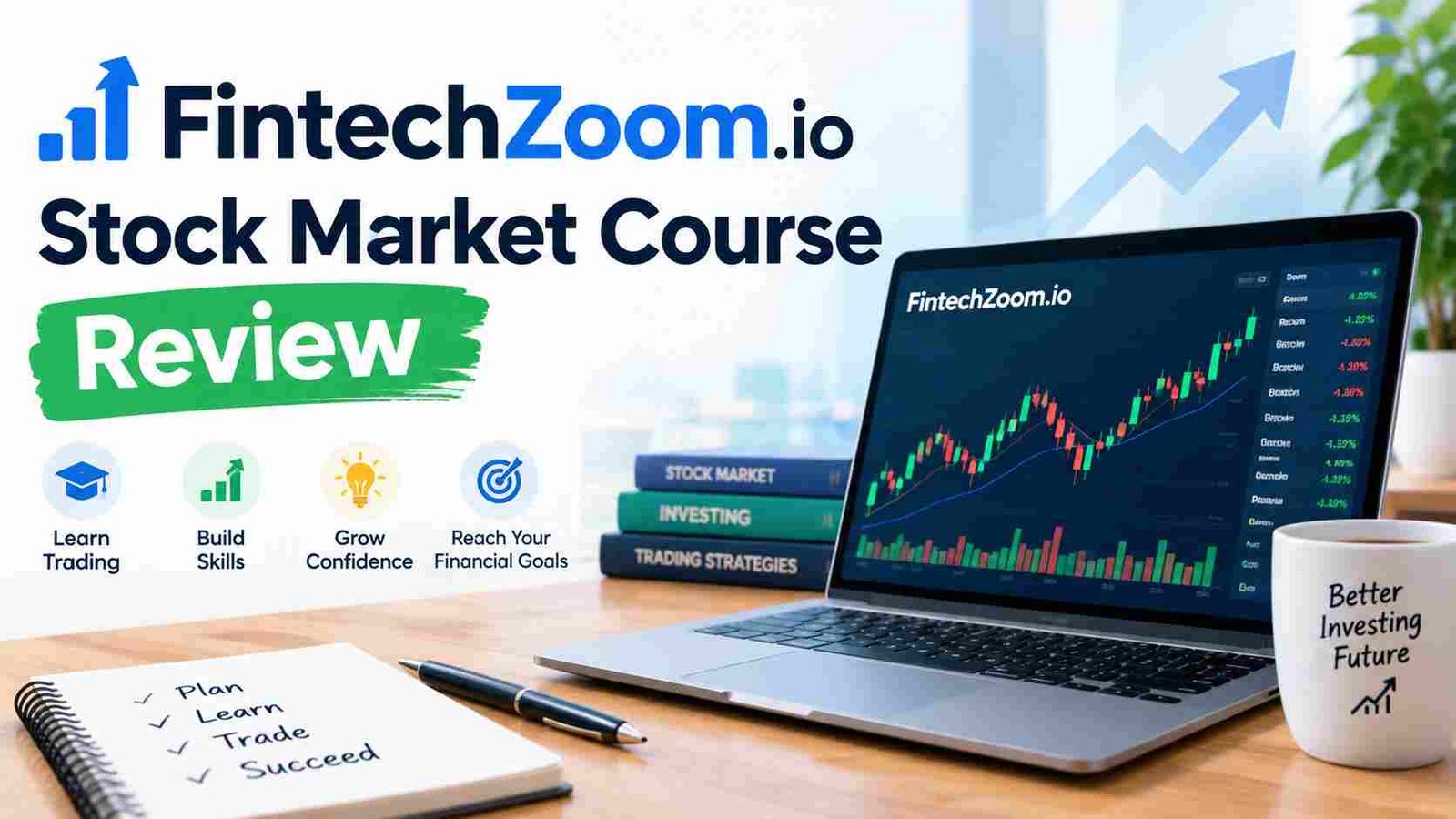
You searched for a straight answer about the FintechZoom.io stock market course.
This is that answer no filler, no hidden agenda.
Here is what this guide covers: what the course actually teaches, who it is a good fit for, what remains unclear, and what to check before you pay anything.
Quick Verdict
The FintechZoom.io stock market course gives beginners a clear, structured path into investing. That is more useful than piecing together random YouTube videos on your own.
It is not the right fit for everyone, though. If you need an accredited certificate or personalized coaching, this course will not give you that.
Before you pay, do three things:
- Confirm the current price on the official site.
- Check who the instructor is and what their background looks like.
- Read the refund policy carefully before entering your payment details.
One more thing to say plainly: no course guarantees profits. Anyone who tells you otherwise is not being straight with you.
The trust checklist below will show you exactly what to look for before you commit.
Read Also: Is MagzyMinutes.com Worth Reading? An Honest Look at What It Offers and Who Should Use It

What Is the FintechZoom.io Stock Market Course?
It is a self-paced online program that moves you from stock-market basics toward trading and investing. Self-paced means you learn on your own schedule. No fixed class dates.
Here is the part most reviews skip. “FintechZoom.io stock market course” is not one single course. The site lists separate programs for Stock Market Trading, Stock Market Investing, and Financial Literacy.
Three things share the FintechZoom name, so keep them straight:
- FintechZoom.io — the broader finance and news platform.
- The platform’s tools — charts and dashboards.
- The paid course — the thing this review covers.
Lessons usually arrive as short videos, quizzes, templates, and practice exercises. Decide which of the three programs matches your goal before reading on.
Glaadvoice Com Review: What It Is and Who It’s Really For

Trading vs Investing — Which Track Should You Choose?
Trading asks, “When do I buy and sell?” Investing asks, “What do I hold, and for how long?”
The Trading track covers charts, candlestick patterns, day and swing trading, stop-losses, and trading psychology. Its pages list around 4–6 hours of video.
The Investing track covers asset classes, diversification, portfolio construction, and long-term goals. It lists around 7–8 hours.
Think of it this way. Trading is cooking a fast meal for tonight. Investing is planning a week of groceries. Pick one track now based on your time horizon, not on which sounds more exciting.
What Is Sosoactive? A Clear Guide to Its Websites, History, and Trust

Full Curriculum Breakdown
The course follows a logical build. Simple first, then layered complexity:
- Market foundations — how exchanges work and what order types mean.
- Investment vehicles — stocks, ETFs, index funds, mutual funds.
- Account setup — opening a brokerage account and understanding margin.
- Technical analysis — reading charts and price patterns.
- Fundamental analysis — reading financial statements to judge value.
- Risk management and psychology.
- Strategy building and review.
Technical analysis studies price charts to help you time trades. Fundamental analysis studies a company’s health to judge long-term value.
Here is the honest gap: no public syllabus confirms the exact lesson count. Ask for the full syllabus before you enroll. A legitimate course will hand one over.
Zvodeps Explained: Real Website, Workflow Concept, or Just SEO Noise?
Who It’s For (and Who Should Skip It)
This course is a good fit if you are:
- Starting from zero and want a clear path.
- An aspiring trader who wants a foundation before risking real money.
- A new investor learning diversification and portfolio basics.
- A busy professional who can study five to seven hours a week.
Skip it if you need an accredited degree credential, want one-on-one mentorship, or expect guaranteed trade signals. Anyone promising guaranteed returns is waving a red flag.
Match yourself to one line above. If you land in the “skip it” group, jump to the alternatives section.
Trust & Transparency Checklist Before You Pay
This section matters most. Plenty of write-ups repeat marketing copy as fact. You deserve better before spending money.
Run through this before you enter card details:
- Confirm who owns the website.
- Confirm who teaches the course by name.
- Check that instructor credentials can be verified independently.
- Ask for a public syllabus.
- Confirm the total price before any contact form.
- Read the refund policy in writing.
- Ask what the certificate is recognized for outside the platform.
Three things stay unclear on the course pages: named instructors, a current public price, and any external accreditation for the certificate. Screenshot this checklist. Tick every box first.
UploadBlog.com Review: I Tested the Platform to See If It’s Worth It

FintechZoom.io vs FintechZoom.com Domain Warning
This is a trust issue, not a footnote. FintechZoom.com states it is the official domain and that fintechzoom.io is not affiliated with it.
Similar branding does not prove shared ownership. That matters more here because you may enter payment details.
Do three things:
- Check the exact domain in your browser bar before typing anything.
- Confirm which legal entity receives your payment.
- Do not assume a similar name means an official product.
Look at the address bar right now and confirm you are where you think you are.
FintechZoom.io vs Alternatives
This course is not your only option. Free resources like Investopedia and regulator sites build your vocabulary at no cost, but rarely give you a clear path.
University courses go deep on theory but cost more. Platforms like Coursera show pricing, ratings, and duration upfront — the exact clarity these review posts lack.
On a strict budget? Start with free investor education plus one structured course. Compare at least one free option and one paid option before you commit money.
What You Can Realistically Learn
Set honest expectations. A few hours of video is a map, not the journey.
After about 30 days of steady study, you can expect to read a basic price chart, understand order types, set up a brokerage account, and practice trades in a simulator.
Here is a real example. When GameStop went wild in 2021, its RSI shot well above 70 — a classic “overbought” signal. This kind of course teaches you to spot that before you chase a spike into a crash.
Another one. If Apple trades at a P/E ratio of 30 while its industry sits near 20, you are paying a premium — and you learn to ask why.
What it will not do: guarantee profits, replace years of experience, or make you a pro in weeks. Before you buy, write down the one skill you most want in 30 days.
Final Verdict
The course brings together pieces most beginners struggle to find in one place. The curriculum is solid; the transparency is not.
- Curriculum depth: 7/10
- Beginner friendliness: 8/10
- Transparency: 4/10
- Certificate usefulness: 3/10
Complete beginner wanting structure? Useful once you confirm price and teacher. Want credentials or coaching? Spend elsewhere.
Preview a sample lesson, confirm the price, and read the refund policy. Then decide with facts, not hype.
FAQs
What is the FintechZoom.io stock market course?
It refers to the stock-market education on fintechzoom.io, which lists separate trading and investing programs.
Is the course free?
The public course pages do not clearly show a current price. Confirm it with the provider before paying.
Does it include an accredited certificate?
The pages advertise a completion certificate, but no external accreditation is established.
Who teaches the course?
The pages refer to experts but do not clearly name instructors with verifiable credentials.
Is FintechZoom.io the same as FintechZoom.com?
No. FintechZoom.com states it is the official domain and is not affiliated with fintechzoom.io.
Can the course guarantee profits?
No. No course can remove market risk or promise returns.